The Complete EV Charging Guide
Mastering infrastructure, speed, and plug standards.
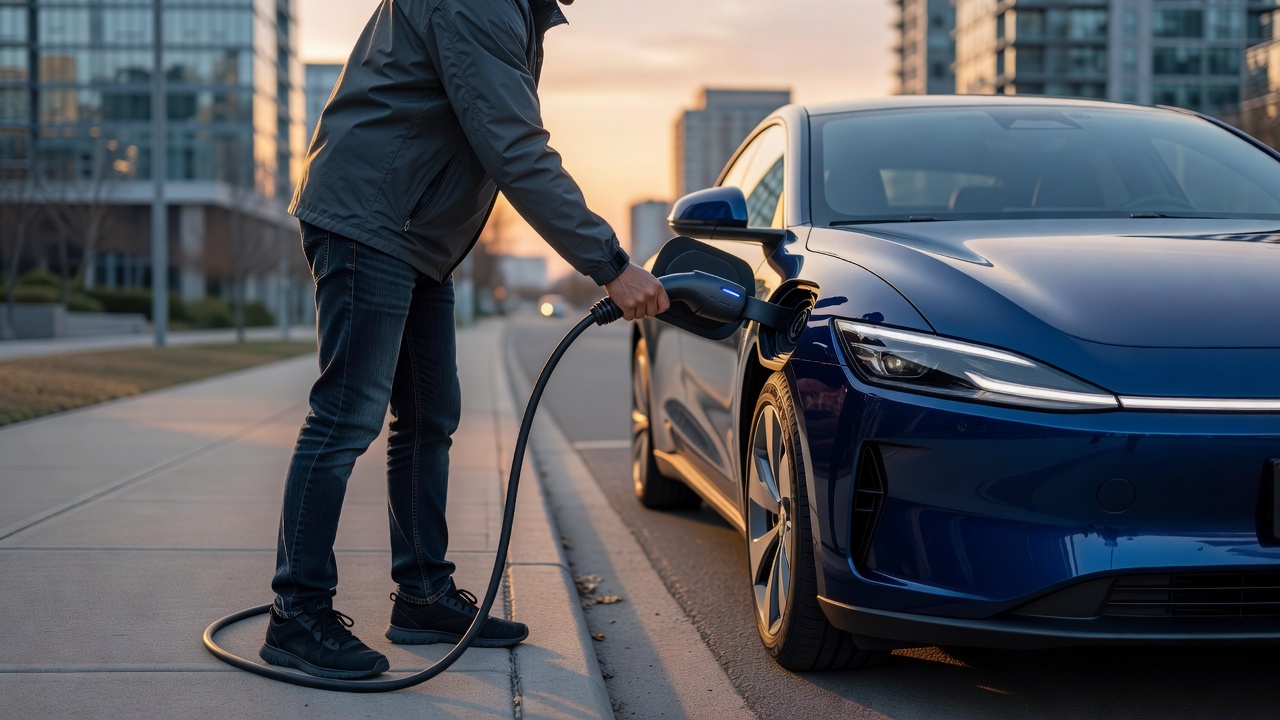
Transitioning to an electric vehicle (EV) brings many lifestyle changes, but none are more prominent than how you "refuel." Unlike stopping at a gas station for five minutes, EV charging requires a strategic shift in mindset. You will charge where you sleep, where you work, and occasionally, at dedicated high-speed stops along the highway.
Understanding the different levels of charging, connector types, and public networks is critical to a seamless EV ownership experience. This guide breaks down everything you need to know about EV charging infrastructure.
The Three Levels of Charging
Not all chargers deliver electricity at the same rate. Industry standards categorize charging speeds into three distinct "levels," each serving a specific use case.
Level 1: The Standard Outlet
Level 1 charging uses a standard 120-volt household AC outlet (in North America). It requires no special installation—just the mobile charging cord that often comes with the vehicle. However, it is remarkably slow, adding roughly 3 to 5 miles of range per hour.
- Best for: Plug-in hybrids (PHEVs) with small batteries, or EV drivers with very short daily commutes (under 30 miles) who can leave the car plugged in overnight.
- Pros: Zero installation cost; plugs in anywhere.
- Cons: Insufficient for large battery packs or long-distance commuters.
Level 2: Home and Destination
Level 2 charging operates on 240-volt power, similar to what an electric dryer or oven requires. These stations can add 15 to 40 miles of range per hour, meaning a completely depleted long-range EV can be fully charged overnight.
Most EV owners install a Level 2 charging box in their garage or driveway. You will also find them at workplaces, shopping malls, and hotels—places where you park for several hours (hence "destination charging").
- Best for: Daily overnight home charging, workplace charging.
- Pros: Predictable morning full charge; takes advantage of cheap overnight electricity rates.
- Cons: Requires professional electrician installation at home.
Level 3: DC Fast Charging
Direct Current (DC) Fast Chargers are commercial-grade installations that bypass the vehicle's onboard converter, delivering DC power directly to the battery. Depending on the station's output and the car's architecture (400V vs. 800V), DC fast charging can add 100 to 250 miles of range in just 15 to 30 minutes.
- Best for: Highway road trips and drivers without home charging access.
- Pros: Enables long-distance travel.
- Cons: More expensive per kWh than home charging; frequent use can slightly accelerate battery degradation.
Understanding Connector Types
Historically, the EV industry suffered from a fragmented plug standard. However, the market is rapidly consolidating. Here are the primary connectors you will encounter:
| Standard | Region/Primary Use | Status |
|---|---|---|
| J1772 | North America (AC Level 1 & 2) | Widely used for non-Tesla AC charging, but phasing out. |
| CCS (Combined Charging System) | North America & Europe (DC Fast) | Standard in Europe; transitioning out in North America. |
| NACS (North American Charging Standard) | North America (AC & DC) | Originally Tesla proprietary, now adopted by nearly all major automakers in North America. |
| CHAdeMO | Legacy Japanese EVs (Nissan Leaf) | Effectively obsolete for new vehicles. |
Public Charging Networks and Etiquette
When venturing away from home, you will rely on third-party public charging networks. Success on a road trip depends on planning routes using integrated vehicle navigation or apps that aggregate station data to check live availability.
Charging Etiquette: Only occupy a charging stall while actively charging. Once your vehicle reaches 80%, DC fast charging speeds drop dramatically to protect the battery. Unless you absolutely need the range to reach your next stop, unplug at 80% and move your vehicle so others can charge.
Home Installation Considerations
If you own your home, installing a Level 2 charger is highly recommended. First, check your electrical panel's capacity. Most chargers require a dedicated 40 or 50-amp circuit. If your panel is old and maxed out, a heavy-up (service upgrade) might be required, adding substantial cost to the installation.
Always hire a certified electrician for the installation, and check for local government or utility company rebates that can offset the hardware and labor costs.